3260 papers • 126 benchmarks • 313 datasets
The equivalent of language modeling but for trajectories.
(Image credit: Papersgraph)

These leaderboards are used to track progress in trajectory-modeling-9
Use these libraries to find trajectory-modeling-9 models and implementations
No subtasks available.
A pipeline is designed to construct a Signalized INtersection Dataset (SIND), which contains 7 hours of recording including over 13,000 TPs with 7 types and it is believed that SIND would be an effective supplement to existing datasets and can promote related research on autonomous driving.
Latent Variable Sequential Set Transformers are encoder-decoder architectures that generate scene-consistent multi-agent trajectories that achieve top results on the global nuScenes vehicle motion prediction leaderboard, and produces strong results onThe Argoverse vehicle prediction challenge.
The Q-value regularized Transformer (QT), which combines the trajectory modeling ability of the Transformer with the predictability of optimal future returns from DP methods to enhance the state-of-the-art in offline RL.
Developing safe human-robot interaction systems is a necessary step towards the widespread integration of autonomous agents in society. A key component of such systems is the ability to reason about the many potential futures (e.g. trajectories) of other agents in the scene. Towards this end, we present the Trajectron, a graph-structured model that predicts many potential future trajectories of multiple agents simultaneously in both highly dynamic and multimodal scenarios (i.e. where the number of agents in the scene is time-varying and there are many possible highly-distinct futures for each agent). It combines tools from recurrent sequence modeling and variational deep generative modeling to produce a distribution of future trajectories for each agent in a scene. We demonstrate the performance of our model on several datasets, obtaining state-of-the-art results on standard trajectory prediction metrics as well as introducing a new metric for comparing models that output distributions.
This work presents a novel, data-driven, network-based Trajectory Clustering (TC) algorithm for identifying Parkinson’s subtypes based on disease trajectory, which can effectively assist in targeted subtype-specific treatment in the field of personalized medicine.
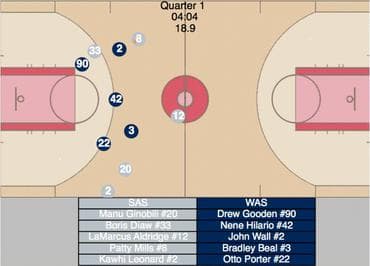
In many multi-agent spatiotemporal systems, agents operate under the influence of shared, unobserved variables (e.g., the play a team is executing in a game of basketball). As a result, the trajectories of the agents are often statistically dependent at any given time step; however, almost universally, multi-agent models implicitly assume the agents' trajectories are statistically independent at each time step. In this paper, we introduce baller2vec++, a multi-entity Transformer that can effectively model coordinated agents. Specifically, baller2vec++ applies a specially designed self-attention mask to a mixture of location and"look-ahead"trajectory sequences to learn the distributions of statistically dependent agent trajectories. We show that, unlike baller2vec (baller2vec++'s predecessor), baller2vec++ can learn to emulate the behavior of perfectly coordinated agents in a simulated toy dataset. Additionally, when modeling the trajectories of professional basketball players, baller2vec++ outperforms baller2vec by a wide margin.
A selection of methods that take different approaches to clustering longitudinal data, based on cross‐sectional clustering, distance‐based clustering, feature‐based clustering, feature‐based clustering, and mixture modeling are presented.
This work proposes a contrastive learning-based trajectory modeling method named TrajCL, which can jointly learn both the spatial and the structural patterns of trajectories and can outperform the state-of-the-art supervised method by up to 56% in the accuracy for processing trajectory similarity queries.
A marker-free instrumental approach to the analysis of gait disturbances in animal models shows that in a mouse model representative movement patterns are characterized by two asymptotic regimes characterized by integrated 1/f noise at small scales and nearly random displacements at large scales separated by a single crossover.
Adding a benchmark result helps the community track progress.