natural-language-processing-11
Open Intent Discovery
3260 papers • 126 benchmarks • 313 datasets
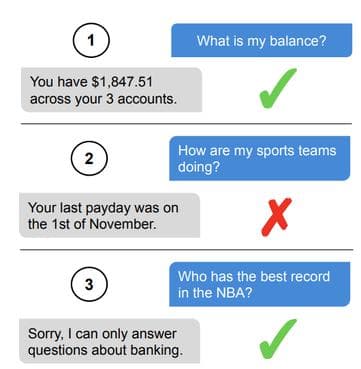
Open intent discovery aims to leverage limited prior knowledge of known intents to find fine-grained known and open intent-wise clusters.
(Image credit: Papersgraph)

Benchmarks
These leaderboards are used to track progress in open-intent-discovery-22
Trend
Dataset
Best Model
Actions

SNIPS
SNIPS

Stackoverflow
Stackoverflow

CLINC150
CLINC150
Libraries
iUse these libraries to find open-intent-discovery-22 models and implementations
Datasets
Subtasks
No subtasks available.
Most implemented papers
Discovering New Intents with Deep Aligned Clustering
Hanlei Zhang, Hua Xu, Ting-En Lin, Rui Lv•Tue Dec 15 2020
This work proposes an effective method (Deep Aligned Clustering) to discover new intents with the aid of limited known intent data, and leverages a few labeled known intent samples as prior knowledge to pre-train the model.
133


