3260 papers • 126 benchmarks • 313 datasets
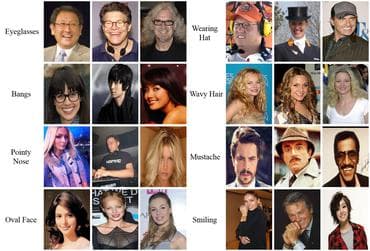
Multi-task learning aims to learn multiple different tasks simultaneously while maximizing performance on one or all of the tasks. ( Image credit: Cross-stitch Networks for Multi-task Learning )
(Image credit: Papersgraph)

These leaderboards are used to track progress in multi-task-learning-14
Use these libraries to find multi-task-learning-14 models and implementations
This work presents a simple yet effective approach termed as FairMOT based on the anchor-free object detection architecture CenterNet, which outperforms the state-of-the-art methods by a large margin on several public datasets.
A robust single-stage face detector, named RetinaFace, which performs pixel-wise face localisation on various scales of faces by taking advantages of joint extra-supervised and self-super supervised multi-task learning.
GPT-3 achieves strong performance on many NLP datasets, including translation, question-answering, and cloze tasks, as well as several tasks that require on-the-fly reasoning or domain adaptation, such as unscrambling words, using a novel word in a sentence, or performing 3-digit arithmetic.
An open-sourced dataset, which contains 349 COVID-19 CT images from 216 patients and 463 non-COVID- 19 CTs, is built, which is used to develop diagnosis methods based on multi-task learning and self-supervised learning that achieve an F1 of 0.90, an AUC of0.98, and an accuracy of 1.89.
A principled approach to multi-task deep learning is proposed which weighs multiple loss functions by considering the homoscedastic uncertainty of each task, allowing us to simultaneously learn various quantities with different units or scales in both classification and regression settings.
This work incorporates the appearance embedding model into a single-shot detector, such that the model can simultaneously output detections and the corresponding embeddings, and is formulated as a multi-task learning problem.
This work identifies a set of three conditions of the multi-task optimization landscape that cause detrimental gradient interference, and develops a simple yet general approach for avoiding such interference between task gradients.
This work proposes a novel multi-task learning approach, Multi-gate Mixture-of-Experts (MMoE), which explicitly learns to model task relationships from data and demonstrates the performance improvements by MMoE on real tasks including a binary classification benchmark, and a large-scale content recommendation system at Google.
While most recent models have near random-chance accuracy, the very largest GPT-3 model improves over random chance by almost 20 percentage points on average, however, on every one of the 57 tasks, the best models still need substantial improvements before they can reach expert-level accuracy.
Adding a benchmark result helps the community track progress.