3260 papers • 126 benchmarks • 313 datasets
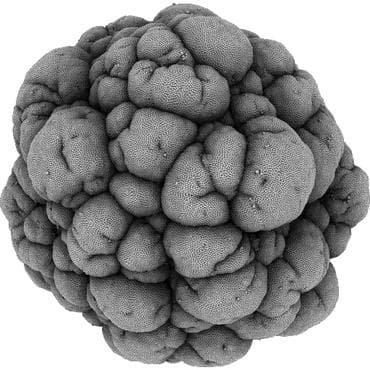
Dimensionality reduction is the task of reducing the dimensionality of a dataset. ( Image credit: openTSNE )
(Image credit: Papersgraph)

These leaderboards are used to track progress in dimensionality-reduction-5
No benchmarks available.
Use these libraries to find dimensionality-reduction-5 models and implementations
The UMAP algorithm is competitive with t-SNE for visualization quality, and arguably preserves more of the global structure with superior run time performance.
It is shown how the adversarial autoencoder can be used in applications such as semi-supervised classification, disentangling style and content of images, unsupervised clustering, dimensionality reduction and data visualization.
This paper proposes a novel sparsity-aware algorithm for sparse data and weighted quantile sketch for approximate tree learning and provides insights on cache access patterns, data compression and sharding to build a scalable tree boosting system called XGBoost.
A joint DR and K-means clustering approach in which DR is accomplished via learning a deep neural network (DNN) while exploiting theDeep neural network's ability to approximate any nonlinear function is proposed.
This paper proposes an Efficient Channel Attention (ECA) module, which only involves a handful of parameters while bringing clear performance gain, and develops a method to adaptively select kernel size of 1D convolution, determining coverage of local cross-channel interaction.
This paper presents the key algorithmic techniques behind CatBoost, a new gradient boosting toolkit and provides a detailed analysis of this problem and demonstrates that proposed algorithms solve it effectively, leading to excellent empirical results.
A novel Pooling-based Vision Transformer (PiT) is proposed, which achieves the improved model capability and generalization performance against ViT and outperforms the baseline on several tasks such as image classification, object detection and robustness evaluation.
Out-of-core randomized principal component analysis (oocPCA) is presented, so that the top principal components of a dataset can be computed without ever fully loading the matrix, hence allowing for t-SNE of large datasets to be computed on resource-limited machines.
An effective black-box attack that also only has access to the input (images) and the output (confidence scores) of a targeted DNN is proposed, sparing the need for training substitute models and avoiding the loss in attack transferability.
Adding a benchmark result helps the community track progress.