3260 papers • 126 benchmarks • 313 datasets
Heart rate variability (HRV) is the physiological phenomenon of variation in the time interval between heartbeats. It is measured by the variation in the beat-to-beat interval.
(Image credit: Papersgraph)

These leaderboards are used to track progress in heart-rate-variability
No benchmarks available.
Use these libraries to find heart-rate-variability models and implementations
No subtasks available.
The Beam AI SDK is introduced, which can monitor user stress through the selfie camera in real-time and demonstrate an average Pearson correlation of 0.801 in determining stress and heart rate variability, thus producing commercially useful readings to derive content decisions in apps.
A clinical decision support system to predict sleep quality based on trends of physiological signals in the deep sleep stage and the capability of using wearable sensors to measure sleep quality and restfulness in CPWD is demonstrated.
This work presents SCAMPS, a dataset of synthetics containing 2,800 videos with aligned cardiac and respiratory signals and facial action intensities, and provides precise descriptive statistics about the underlying waveforms, including inter-beat interval, heart rate variability, and pulse arrival time.
A method for quantifying the inherent unpredictability of a continuous-valued time series via an extension of the differential Shannon entropy rate, and provides a data-driven approach for estimating the specific entropy rate of an observed time series.
This work demonstrates a general pipeline to apply persistent homology to study time series, particularly the instantaneous heart rate time series for the heart rate variability (HRV) analysis and proposes a systematic and computationally efficient approach to summarize persistence diagrams, which is coined persistence statistics.
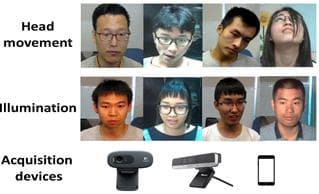
A cross-verified feature disentangling strategy to disentangle the physiological features with non-physiological representations, and then use the distilled physiological features for robust multi-task physiological measurements.
A deep-learning approach leveraging tiramisu autoencoder model is proposed to suppress motion-artifact noise and make the R-peaks of the ECG signal prominent even in the presence of high-intensity motion and enables IBI estimation from noisy ECG signals with SNR up to -30 dB.
The Physiological Multitask-Learning (PhysioMTL) method provides remarkable prediction results on unseen held-out subjects given only $20\% of the subjects in real-world observational studies, and enables a counterfactual engine that generates the effect of acute stressors and chronic conditions on HRV rhythms.
This work proposes an rPPG measurement method, which is the first work to use deep spatio-temporal networks for reconstructing precise rP PG signals from raw facial videos, and can achieve superior performance on both HR and HRV levels comparing to the state-of-the-art methods.
A novel application of the Unet combined with Inception and Residual blocks is proposed to perform the extraction of R-peaks from an ECG, which is a substantial improvement over the other beat detectors.
Adding a benchmark result helps the community track progress.