computer-vision-15
3D Semantic Segmentation
3260 papers • 126 benchmarks • 313 datasets
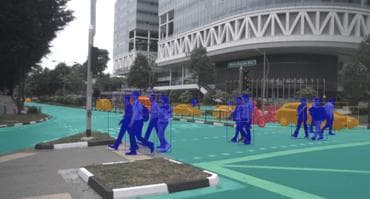
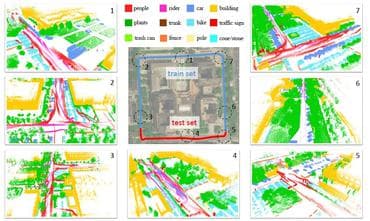
3D Semantic Segmentation is a computer vision task that involves dividing a 3D point cloud or 3D mesh into semantically meaningful parts or regions. The goal of 3D semantic segmentation is to identify and label different objects and parts within a 3D scene, which can be used for applications such as robotics, autonomous driving, and augmented reality.
(Image credit: Papersgraph)

Benchmarks
These leaderboards are used to track progress in 3d-semantic-segmentation-15
Trend
Dataset
Best Model
Actions

SemanticKITTI
SemanticKITTI

ScanNet200
ScanNet200

SensatUrban
SensatUrban
Libraries
iUse these libraries to find 3d-semantic-segmentation-15 models and implementations
12 papers 859